
The Trials@Home DCT course
CHAPTER 5: RADIAL, the Trials@Home proof-of-concept trial, as an example of a trial using decentralised elements

The RADIAL trial is a proof-of-concept clinical trial exploring how clinical trial activities can be moved from hospitals to participants’ homes. It involved people with Type 2 diabetes across six European countries and compared three different trial formats:
-
Conventional (site-based)
-
Hybrid (partially decentralised)
-
Fully decentralised
Decentralised elements used
These features allowed participants to take part in the trial from home.
Click to expand.

Participating countries and research questions
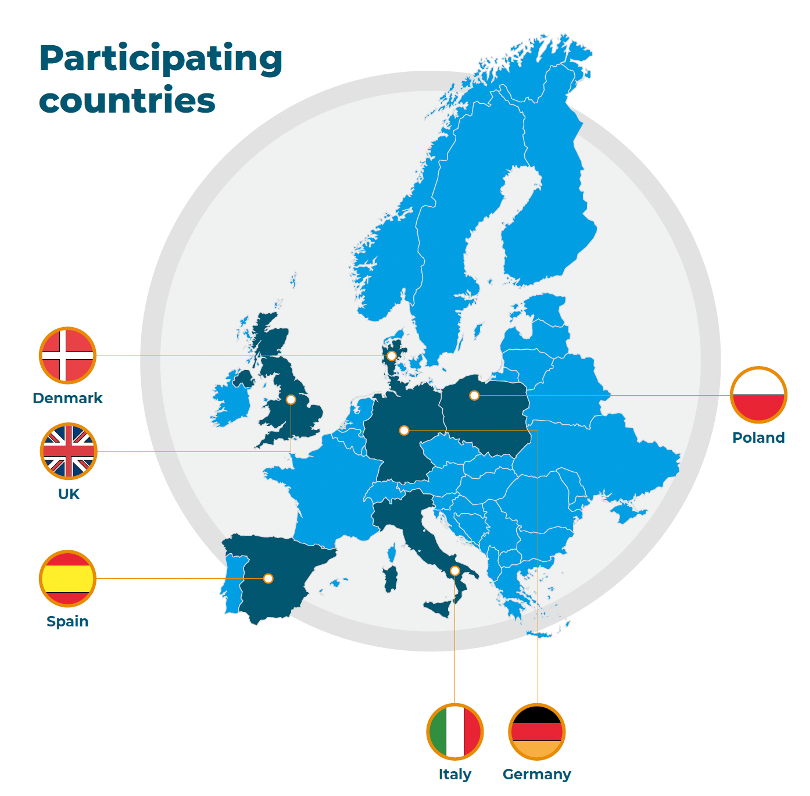
- This study had two primary objectives.
- First one is to assess potential benefits of a decentralised clinical trial approach on participant retention, recruitment, diversity, cost, site staff and participant satisfaction.
- Second one is to determine acceptability of a decentralised clinical trial approach regarding data quality, safety oversight and medication compliance within the arms that have a different degree of decentralisation.
- The following objective is related to the clinical endpoints and is a secondary objective for this study to determine whether the efficacy of an intervention with insulin Toujeo® is within the accepted range within the arms with different degrees of decentralisation.
RADIAL study design: A detailed exploration
The RADIAL study design was structured to facilitate a comprehensive evaluation of DCT approaches.
- Two-Part Structure: The study was divided into two parts (Part A and Part B), each with a specific purpose:
- Part A: the conventional and hybrid arms. Participants in Part A were recruited at conventional study sites and randomly distributed in each of the Part A arms.
- Part B: The remote arm. Participants in Part B were recruited remotely via online recruitment campaigns.
- Three-Arm Parallel-Group Design: The study used a three-arm design, meaning participants were assigned to one of three different study groups:
- Conventional Arm: This arm represented the conventional clinical trial model, with most trial activities conducted at the study site.
- Hybrid Arm: This arm combined elements of both conventional and decentralised trials, incorporating some site-based visits and some remote activities.
- Remote Arm: This arm is fully decentralised, with all trial activities conducted in the participant’s home.
- Rationale for the Design: The three-arm, two-part structure was carefully chosen to address the key research questions:
- Comparison of Decentralisation Levels: having the conventional, hybrid, and remote arm allowed for a direct comparison of different levels of decentralisation within the same study.
- Evaluation of Recruitment Strategies: Separating remote recruitment into Part B enabled the researchers to assess the impact of different recruitment strategies (site-based versus remote) on participant characteristics and trial outcomes.
Visual representation of the RADIAL study arms
1. Visits: In-Person, home nurse visit or remote?

Part A:
- Conventional Arm (top blue line):
- Site-based recruitment and screening
- In-person visits at the study site at the start of the study, week 12, and end-of-treatment (EOT)
- Scheduled phone calls for data collection
- Hybrid Arm (middle light blue line):
- Site-based recruitment and screening
- In-person visits at the study site at the start of the study and EOT
- Home nurse visit at week 12
- Use of the RADIAL study app for data collection
Part B:
- Remote Arm (bottom dark blue line):
- Remote recruitment and screening
- Virtual appointments at screening, start of study, week 12, and EOT
- Use of the RADIAL study app for data collection
- Blood sample collection by the participant at home at week 12
2. Full overview of RADIAL trial activities and how they were performed

Patient involvement in RADIAL
Patient involvement was a cornerstone of the RADIAL trial, recognising the crucial role of people with lived experience in shaping clinical research.
- The Trials@Home Patient Expert Panel (PEP): The Trials@Home consortium established a Patient Expert Panel (PEP) to actively engage people living with diabetis in the design and implementation of the RADIAL study.
- PEP Contributions: The PEP provided valuable input and guidance on various aspects such as:
- Lived Experience of Diabetes: Patients shared their experiences of living with diabetes, helping researchers understand the challenges and needs of the target patients.
- Motivators and Barriers to Participation: The PEP provided insights into what motivates individuals to participate in clinical trials and what obstacles might prevent them from enroling or staying in the study.
- Relevance of Study Research Goals: The PEP offered feedback on the importance and relevance of the study’s goals, ensuring that the research focused on what matters most to people with diabetes.
- Choice of DCT Approaches: The PEP influenced the selection of decentralised trial elements and technologies, advocating for accessibility, user-friendliness, and convenience.
- Impact of the PEP: The active engagement of people with lived experience in the RADIAL trial design aimed to:
- Enhance Patient-Centricity: By incorporating the patient perspective, the study design became more patient-centred, addressing the needs and preferences of participants.
- Improve Trial Acceptability: Patient involvement helped ensure that the trial procedures and technologies were acceptable and convenient for participants, increasing the likelihood of successful enrolment and retention.
- Increase the Relevance of Research: By focusing on outcomes that are important to patients, the study aimed to generate more relevant and meaningful results.
RADIAL: Regulatory considerations
Conducting a multinational clinical trial like RADIAL involves navigating complex regulatory landscapes. The Trials@Home consortium had interactions with the regulators at the European and national level prior to finalising the study protocol and have the clinical trial application submitted for approval.
The RADIAL study generated significant insights into the use of DCTs and will contribute to the development of guidance and recommendations for conducting DCTs, addressing key operational, regulatory, and ethical considerations.
RADIAL: Learnings and the Trials@Home Recommendations
The RADIAL study was a crucial step in the evolution of clinical trials. By rigorously investigating the use of decentralised approaches, RADIAL generated valuable knowledge that can inform the development of more efficient, accessible, and patient-centred research methods.
Furhter reading
- More information on RADIAL and the Trials@Home recommendations for DCTS: https://trialsathome.com
- Bringing Trial Activities to Participants-The Trials@Home RADIAL Proof-of-Concept Trial Investigating Decentralization of Trials – PubMedhttps://ascpt.onlinelibrary.wiley.com/doi/10.1002/cpt.70025
- The full set of RADIAL papers